Where I’m From

I’m from letting go
of all hope for a better past.

I’m from I
who restoreth mine own soul,
from discovering light and divinity
imprinted within me.

I’m from defiant hope
and healing—
rejecting the audacity
of our fathers’ fathers’ fathers’
insistence
that this is all we’ll ever be.

I’m from the Fool,
boldly stepping forward
on perilous paths
toward destinations unknown—
knowing that even if I die,
I first yet lived.

I’m from seeking stillness,
tracing spiritual lines backwards,
and untangling the knotwork
of generational curses—
getting to the root
of all this debris.

I’m from the healing arts
and the Lefthand Path,
cleansing and exorcising
spirits and people
drawing out the worst in us.

I am from choosing myself.

Ten Things I’ve Been Meaning to Say to You (Christians)

Dear Reader,1

If you identify as a Christian in present day America, especially a member of one of the many flavors of traditional Protestant or the Protestantized American Catholic church, these are 10 things I’ve been meaning to say to you:

1. Love was never negotiable. Jesus didn’t include caveats or escape clauses when he told you to love your neighbors. It doesn’t matter who came after, whether J. D. Vance or St Augustine, Jesus could not have been more clear when he explained to the young lawyer that your neighbors are the human beings you share this world with. Yet, I have watched you bending at every wrong angle like contortionists trying to justify your cruelty towards those who live and love differently than you. You’ve crept into every wrong place to kick down doors where Jesus would gently knock.2 You wield love like hate and wonder why so many of us reject you—we’re not persecuting you, we’re setting boundaries because we are tired of being struck by the hands you can’t keep to yourself.

2. Before you shout, “it’s Adam and Eve, not Adam and Steve,” I’d caution you to read the text a little closer. The order and pairing does not preclude other orders or pairings, but if you insist on a strictly rigid literal reading, I will remind you that the first lie uttered in the Bible comes from the mouth of God.3 Feel nervous? See how you’re ready to reinterpret something about “spiritual death” into the text despite the language leaving no room for you to do so? Your negotiations, consolidations, and reinterpretations establish orthodoxies your texts can’t sell. The Book’s voice is far from univocal, so perhaps, find what works for you and leave us to find what works for us. After all, it was Paul who told you to “work on your own salvation with fear and trembling”4 –not ours.

3. The Rapture is not biblical. It is an invention of the nineteenth century. When the world collapses under the mess you’ve made—I promise—you’re going to die right next to the rest of us. Side note, the Apocalypse of John is not a prophecy; it’s apocalyptic literature. Look it up.

4. “The gays” aren’t coming for your children. Drag Queens aren’t grooming them either. The trans woman is just trying to use the bathroom, she’s not interested in your daughter. The argument is a distraction meant to make you overlook the thousands upon thousands upon thousands of documented cases where your pastor, your priest, your youth leader, your deacon, your elder was caught in the pants of your children. Stop letting your leaders project their sins onto others. Rise up and clean house! Remember, Jesus flipped the hell out of some tables and got a little crazy with a hand-braided whip. You might want to try to be more like him.

5. But being like Jesus means letting go of the ideals of meritocracy. It’s funny. You say Jesus loves, forgives, and saves freely, but the moment we try to give free lunches to starving kids or shelter the homeless, you’re the first to accuse us of being socialists. Look, if Jesus who was neither were measured under the standards of capitalism and socialism, my hand to the gods, you would accuse him of conspiring to triple “D”5 your beloved billionaire CEOs.

6. I think you forgot you can’t serve God and money.6

7. Many of you have convinced yourselves that forgiveness is delivered upon request, regardless of the tone or intent with which it is requested. Many of you have convinced yourself that forgiveness requires no work, no reparation, no repentance, and no consequences for your actions. You conflate forgiveness with access as if forgiveness removes the boundaries we erect to keep ourselves safe—from you!

8. Stop throwing rocks at your brothers and sisters who have the stones to say, “I think somewhere along the way, we’ve gotten a little off course.” Of course, it is hard to admit you’ve taken a wrong turn in a system that insists on its own perfection, but listen, heed their words. Every prophet God sent to set right his people got axed, too.7 For the love of God, learn something from your Book, stop repeating the same mistakes.

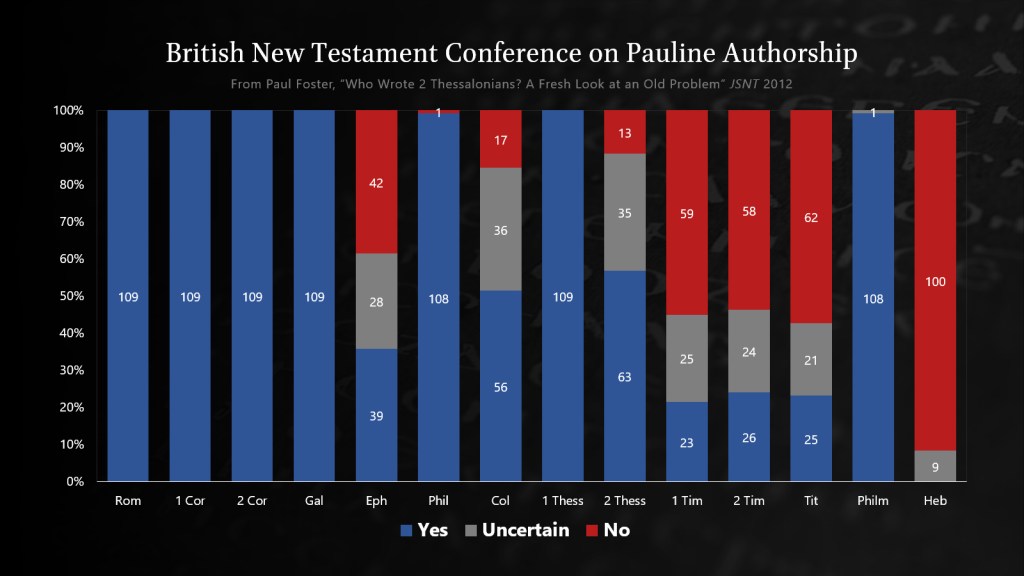
9. Paul didn’t write the pastoral epistles. They’re regarded as forgeries. Eject them from the canon already.

10. At some point, you must take accountability. Not letting the left hand know what the right hand is doing refers8 to charity. It wasn’t a call to ignorance. Look in the mirror. See what you have become—not becoming but have become. Something’s wrong. There is a cancer metastasizing, spreading, and killing everything that made you Christ-like. Seek treatment now . . . before it’s too late . . . I hope it’s not too late.

  1. This is an essay I wrote for class. The assignment was to write a “list essay” using Jason Reynolds’s “Ten Things I’ve Been Meaning to Say to You” as a mentor text. What follows is the result of that assignment. Enjoy? ↩︎
  2. Revelation 3:20. Now to be fair to this verse, it refers to the church in Laodicea. The author bears witness to a letter written to a church that is “lukewarm” and will be rejected by “the faithful and true witness, the origin of God’s creation . . .” Even as this church stands to be cut off, the letter writer knocks and calls with the promise that if their voice is heard and a response is made, then the letter writer will “come in and eat with (them), and (they) with (him).” ↩︎
  3. Genesis 2:15-17. ↩︎
  4. Philippians 2:12-13. ↩︎
  5. This is a reference to “Deny, Defend, Depose,” the words etched onto the bullet casings found at the United Health CEO’s murder scene. ↩︎
  6. Matthew 6:24. ↩︎
  7. This play on words refers to a story found in Acts 7. ↩︎
  8. Matthew 6:3. ↩︎

Does God Bring Out Our Best?

I was taught that the Christian God brings out the best in us, individually and corporately. If we follow God’s commands, arbitrarily selected and defined by Christian leaders, we will become a happy, loving, joyous people living in a happy, God-honoring society. Christians, as guides for the blind, were to seek out places of political power so we might lead the world to this imagined paradise on earth.

I used to believe this, but now I am less convinced, so much so that I have renounced my faith. Some of the most angry, miserable, hateful, and violent people I have met were faithful, church-going Christians. The politics of the Christian church in America has become highly authoritarian–less concerned with genuine communion with God and more concerned with controlling every aspect of life.

If the Christian God brings out our best and creates a community of love, then why are American Christians (Catholics, I’m including you, too) known not by their love but by their hatred and bigotry? Why do we see organizational Christian leadership and its laity participating in harming those identified by the Bible as “the least of these” (Mt 25.31-46). I believe it has to do with the intellectual dishonesty and inconsistency of American Christianity.

American Christianity, primarily American Protestant and White Evangelical Christianity, makes dishonest claims about the Bible itself. The Southern Baptist Convention (SBC), the largest Protestant denomination in the United States, formed in 1845 in Augusta, GA, as a response to slave-owning Baptists being disqualified to serve as missionaries, claims:

[The Bible] has God for its author, salvation for its end, and truth, without any mixture of error, for its matter. Therefore, all Scripture is totally true and trustworthy. It reveals the principles by which God judges us, and therefore is, and will remain to the end of the world, the true center of Christian union, and the supreme standard by which all human conduct, creeds, and religious opinions should be tried. (Southern Baptist Convention).

The SBC asserts that the Bible is “totally true and trustworthy,” yet it is filled with contradictions and errors. Consider the creation account in Genesis chapters 2 and 3. In chapter two, God says to Adam, ” ‘You may freely eat of every tree of the garden, but of the tree of the knowledge of good and evil you shall not eat, for in the day that you eat of it you shall die’ ” (Gn 2.16-17). God states clearly that on the day that Adam eats the fruit of the forbidden tree, he will die. However, in chapter three, the Serpent says to Eve, ” ‘You will not die, for God knows that when you eat of it your eyes will be opened, and you will be like God, knowing good and evil’ ” (Gn 3.4-5). When Eve and Adam ate the fruit, their eyes were opened. They were like God, knowing good and evil. What the Serpent tells Eve comes to fruition. The warning God gave to Adam, saying that he would die on the day he ate the fruit, proved to be a false and empty threat. God even confirms the truth of the Serpent’s words (Gn 3.22). God lied.

This example of God lying contradicts the proof texts Christians use to claim that God does not or cannot lie. One such proof text is Numbers 23:19. Balaam, a non-Israelite prophet, is called by Balak, king of Moab, to curse the people of Israel. When Balaam attempts to curse the Israelites, the Israelites’ God gives Balaam a message to deliver to Balak:

God is not a human being, that he should lie,
or a mortal, that he should change his mind.
Has he promised, and will he not do it?
Has he spoken, and will he not fulfill it?
See, I received a command to bless;
he has blessed, and I cannot revoke it.
He has not beheld misfortune in Jacob,
nor has he seen trouble in Israel.
The Lord their God is with them,
acclaimed as a king among them. (Nm 23.19-21)

God cannot lie, they say, but then he does. Inferred from this proof text, also, is the claim that God does not change their mind, yet we have examples of God changing their mind in other texts, such as in Jonah. In the story of Jonah, God instructs Jonah to tell Ninevah, “Forty days more, and Ninevah will be overthrown!” (Jo 3.4). There were no conditions. It was a statement. Forty days, and you’re done. When the people of Nineveh received this message, they repented, hoping to avoid destruction, and “God changed [their] mind about the calamity that [they] had said [they] would bring upon them, and [they] did not do it” (Jo 3.10).

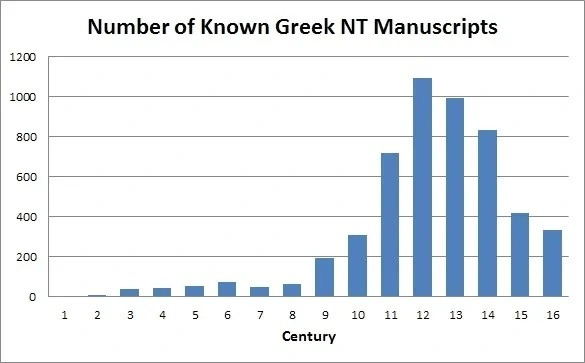
The Bible is not a single work that speaks with one unified voice but a collection of texts written by different authors for different purposes, audiences, and contexts. What one text says about God may–and does–contradict what another text says about God. This isn’t limited to the Old Testament. Textual critics and biblical scholars know the New Testament is filled with errors, additions, and omissions–some intentional and others not. Bible apologists will point out the thousands upon thousands of New Testament manuscripts available while neglecting that many do not agree, are incomplete, and developed hundreds of years after the account of Jesus’ death and resurrection.

Most scholars agree that Paul’s “Pastoral Epistles” are forgeries, yet Christians hold on to them. Perhaps it is because they like the power 1 Timothy gives men over women. Other Pauline letters are in dispute, yet Christians assert every word in the Bible is god-breathed.

How can God bring out our best if the book that Christians assert ought to be “. . . the supreme standard by which all human conduct, creeds, and religious opinions should be tried . . .” is filled with so many contradictions and errors? Consider also the millions of interpretations made by Christians regarding their own text. Their book is confusing and inconsistent for a God who is not the author of confusion (1 Cor 14.33, ESV).

Beyond the book, anecdotally, we see Christians behaving in the worst ways, from antisocial behavior to behaviors that are criminal and dangerous. The same SBC from which I drew the example about the Christian view of the Bible is the same SBC found to have a secret list of hundreds of pastors and church-affiliated personnel accused of sexual abuse (NPR, 2022). Only after the list was exposed did the SBC release it, offering questionable justifications for keeping it hidden and the sudden decision to release it to the public (McLaurin and Slade, 2022). The SBC is far from the only Christian organization diseased with allegations of sexual abuse and vile misconduct.

Christian organizations, such as the Heritage Foundation, advocate for political policies that prioritize the Christian religion and value structure in a country that guarantees religious freedom. They attack women’s healthcare, labor rights, and civil rights protections. They are developing and proposing–through their Republican cronies–policies that target the right of LGBTQIA+ individuals to exist in the public space (Project 2025). Their goals target and harm the most vulnerable communities in our society (Mt 25.41-46).

If Christians are the example of what their God desires from us, then I think they have demonstrated quite clearly, both presently and historically, that the Christian God does not bring out the best in us (Brucker 2014; Christianity and Colonial Expansion; Pahl 2010). On the contrary, this lying, lecherous, and murderous god seems to draw out our worst qualities.

Beautiful Crow

The sky is a polished blue,
wearing her softest white clouds.
She makes love to the sun in front of God
and everyone.
The earth blushes
in brilliant emerald breath
held beneath sapphire eyes,
and yet,
it is the lonely cawing crow
with whom I sympathize.
Its call,
ragged and worn,
lingers in the rhythm
beating inside my chest,
trying to make sense
of a world so big,
yet so small—
like humanity’s capacity for love
and its proclivity to hate.

The Science of Smaller Plates

a commentary on evangelical diet culture and its assault on women.

Smaller plates
mean smaller meals.
Smaller meals
for that smaller you
because they told you
the best you,
the ideal you,
God’s design for you,
is a smaller,
lesser,
wasting away you.
A smaller you,
they say,
is a prettier you,
a more fuckable you,
and a more fuckable you
is the whole reason
God made you.
A holy,
fuckable,
baby making you
because if men
can control themselves
around you,
then you are failing
to honor the purpose
god gave you.

The Rapture

dedicated to Calvary Chapel Hanford

You promised us a rapture.
You said,
‘no one knows the day
or hour,
but the prophecies are aligned,
so any day now.’

But—

It’s been thirty six years.
You’re still looking up.

Maybe God slept in.
Maybe he’s not coming.
Maybe its time to find
something else
to pour your heart into—

like people.

Your Father the Devil

Your god
points to a mass grave
where tangled Palestinian bodies
gasp for breath,
a gospel
of bullets and bloodshed
brought to bear
upon the least of these.
He is a white AR-15
mowing down children
in the second grade
while fucking little girls
of the same age—
a coward
accusing queer communities
of crimes committed
by his pastors and priests.
Your god
is an idol,
created in the likeness
of your hate.

But Grace

is a headstone
bearing your names,
buried in a landfill
for which
none of us
mourn.

The Prophet to the Pastor

In the hard places where bread
becomes stone and crowns
become thorns, there I wander
the palm lined pathways, leading
to the debt you have yet to forgive.
It is exhausting trying to keep up
with you and the nails you drive into
the hands holding out for mercy.
I suppose Grace is just a name
you give your daughters to pretend
you do all this—for Jesus.

But in spite of it all, I still wander,
smuggling in an orchard where
bodies no longer burden the
outstretched olive branches I offer
to those whose backs I buried
beneath broken boughs and
splintered words.

Someone has to sweep the
manger clean. You never know
what displaced souls might need
to rest, like an infant pauper king
held in the bravery of his mother’s
breasts, or a Palestinian leper
just trying his best to survive
the brutality of a Gaza stripped
of its rest.

This world is too hard. We have
forgotten how to make room for
love to thrive. We salt the earth and
examine splinters with wooden eyes
underneath the neon glow where hangs
a miracle whipped Jesus, who holds
a sign that reads: ‘God is love, but he
has his bad days, too.’ If what
you say is true, then God has just as
many bad days as we do.

There has got to be a better way
to make our days brighter—
like bringing in more chairs
and making room for everyone
at the inn, or finding ways to love
the face of God staring back at us
through the eyes of our neighbors—
every neighbor, not just the ones
who gather on cute sing-along
Sundays. All of them. But especially—

especially the ones we’ve crucified
in full view of the Son.

Ode to Calvary Chapel

The Moses model was established to give the pastor
complete control because Chuck Smith did not like
to hear the word ‘no.’ And so followed suit his cult of
imposter pastors who wielded power accountable ‘only
to the Lord.’ Such a strange interpretation falling outside
all models for the Church, but for them, it worked—to
keep the flock in line. Under-shepherds too quick to
identify with Jesus and not the Judas in themselves.
I condemn it. The bath, the water, the baby—all of it.

Strange were the men, never women, who assumed
the role of pastor. Charismatic, arrogant, filled with
all manner of pride, but—they say—holy, and to say
otherwise, was to Divide—division is the greatest sin you
can commit outside of being gay, or a woman who lost
her virginity before marriage; these men were always in
our pants. They were always in our lives pointing our
eyes to distant stars while picking our pockets for their
con—Jesus is coming, they still say, and every earthly
strife is a sign.

We waited. We watched. Jesus never showed up—to
a single Sunday service. Probably because they did
so little serving beyond themselves. Riding the coat
tails of every Evangelical pearl clutch, they stoked the
fears of the flock inside the lines drawn in the sand
between them and everyone else—us versus them.
Them, a euphemism for non-Calvary Chapel believers,
the unsaved, the unclean, the Black, the Brown, the
Other—and especially the misfits who were a misfit
for the cross-shaped coffins they’d stuff us into, like
Lonnie Frisbee who first brought the youth. Lonnie,
who gave Chuck his start. Lonnie, who they threw
away when he couldn’t stop being gay. Lonnie, who
Smith and Laurie claimed repented on his deathbed.
We know they are lying.

Chuck is gone now, I wish Laurie was, too, but his
legacy lives on in the broken bodies beaten down
by illiterate men who use the Bible as a weapon, God
as a scapegoat, and Love as reason to hate. And there
was so much hate.

I condemn it. The bath, the water, the baby—all of it.

We Are Yet Ghosts

We speak like ghosts to keep alive
the cemeteries buried in our throats
because, even after all this time,
there are still some things we are not
yet ready to let go—like the hatchet
we use to open up old wounds. We
confuse mausoleums for museums
where in place of paintings we hang
like criminals. Our skeletons are on
full display, broken and unclean. Both
of our hands are bloody.

While you’ve lingered in that old house,
haunting its halls like a presence known
only by trails of sunflower shells and
the phantom drones of imaginary flight
patterns, I have clawed my way through
the dirt to rise above the earth to find
my way from death to life. I do not yet
know if it is too late for you, but I have
exorcized your demon from my soul,
and one day, hopefully, I might finally
let go.

Silence Fell

The first time I found the courage to ask questions,
I placed them sideways, set them crooked because
I was too afraid to shoot straight, so I chose to shoot
like a star—cascading across heaven.

But your fluency in crooked was limited to speaking;
hearing was never your strong suit, so when—in the
midst of our firefight—I finally said the quiet part out
loud, clear as a bell, you stood still, and then everything
got very quiet.

A God to be Pitied

Ought God be feared?
Or pitied?
To have formed us
In divine likeness,
She sought to love herself.
She tired of being alone.
So from the dust we arose.
And we
Could not make her happy.

So what then is God
If not abdication
And abandonment?
A damning silence
From beyond the stars
Watching our suffering
With such knowing.
Listen,
She is begging
For our forgiveness.

Featured

The Inevitable Introduction

These are the ghosts that wander through the infinite corridors of a divergent, and admittedly, unsound mind. Some belong to a troubled past, others arise from social decay, while others are utterly fabricated. I speak them into being, bring them out for examination, and in doing so, unintentionally examine and critique myself.

Continue reading “The Inevitable Introduction”