Featured

The Inevitable Introduction

These are the ghosts that wander through the infinite corridors of a divergent, and admittedly, unsound mind. Some belong to a troubled past, others arise from social decay, while others are utterly fabricated. I speak them into being, bring them out for examination, and in doing so, unintentionally examine and critique myself.

Continue reading “The Inevitable Introduction”

Where I’m From

I’m from letting go
of all hope for a better past.

I’m from I
who restoreth mine own soul,
from discovering light and divinity
imprinted within me.

I’m from defiant hope
and healing—
rejecting the audacity
of our fathers’ fathers’ fathers’
insistence
that this is all we’ll ever be.

I’m from the Fool,
boldly stepping forward
on perilous paths
toward destinations unknown—
knowing that even if I die,
I first yet lived.

I’m from seeking stillness,
tracing spiritual lines backwards,
and untangling the knotwork
of generational curses—
getting to the root
of all this debris.

I’m from the healing arts
and the Lefthand Path,
cleansing and exorcising
spirits and people
drawing out the worst in us.

I am from choosing myself.

To Pray for Death.

I have been chided
not to pray or wish
for the death of any
human, no matter
what. Yet those
same voices sit in
silence when those
humans sever the lives
of countless—thousands
upon thousands upon
thousands. Luigi was
right. One wicked life
in exchange for the lives
of many. Trump, Vance,
Musk, the Heritage
Foundation, CPAC, Zuckerberg,
and all their billionaire
buddies. Take them all—
every last one. It is not that
we’ve come to play God,
rather, we’ve merely come
to do the gods’ work.

Ten Things I’ve Been Meaning to Say to You (Christians)

Dear Reader,1

If you identify as a Christian in present day America, especially a member of one of the many flavors of traditional Protestant or the Protestantized American Catholic church, these are 10 things I’ve been meaning to say to you:

1. Love was never negotiable. Jesus didn’t include caveats or escape clauses when he told you to love your neighbors. It doesn’t matter who came after, whether J. D. Vance or St Augustine, Jesus could not have been more clear when he explained to the young lawyer that your neighbors are the human beings you share this world with. Yet, I have watched you bending at every wrong angle like contortionists trying to justify your cruelty towards those who live and love differently than you. You’ve crept into every wrong place to kick down doors where Jesus would gently knock.2 You wield love like hate and wonder why so many of us reject you—we’re not persecuting you, we’re setting boundaries because we are tired of being struck by the hands you can’t keep to yourself.

2. Before you shout, “it’s Adam and Eve, not Adam and Steve,” I’d caution you to read the text a little closer. The order and pairing does not preclude other orders or pairings, but if you insist on a strictly rigid literal reading, I will remind you that the first lie uttered in the Bible comes from the mouth of God.3 Feel nervous? See how you’re ready to reinterpret something about “spiritual death” into the text despite the language leaving no room for you to do so? Your negotiations, consolidations, and reinterpretations establish orthodoxies your texts can’t sell. The Book’s voice is far from univocal, so perhaps, find what works for you and leave us to find what works for us. After all, it was Paul who told you to “work on your own salvation with fear and trembling”4 –not ours.

3. The Rapture is not biblical. It is an invention of the nineteenth century. When the world collapses under the mess you’ve made—I promise—you’re going to die right next to the rest of us. Side note, the Apocalypse of John is not a prophecy; it’s apocalyptic literature. Look it up.

4. “The gays” aren’t coming for your children. Drag Queens aren’t grooming them either. The trans woman is just trying to use the bathroom, she’s not interested in your daughter. The argument is a distraction meant to make you overlook the thousands upon thousands upon thousands of documented cases where your pastor, your priest, your youth leader, your deacon, your elder was caught in the pants of your children. Stop letting your leaders project their sins onto others. Rise up and clean house! Remember, Jesus flipped the hell out of some tables and got a little crazy with a hand-braided whip. You might want to try to be more like him.

5. But being like Jesus means letting go of the ideals of meritocracy. It’s funny. You say Jesus loves, forgives, and saves freely, but the moment we try to give free lunches to starving kids or shelter the homeless, you’re the first to accuse us of being socialists. Look, if Jesus who was neither were measured under the standards of capitalism and socialism, my hand to the gods, you would accuse him of conspiring to triple “D”5 your beloved billionaire CEOs.

6. I think you forgot you can’t serve God and money.6

7. Many of you have convinced yourselves that forgiveness is delivered upon request, regardless of the tone or intent with which it is requested. Many of you have convinced yourself that forgiveness requires no work, no reparation, no repentance, and no consequences for your actions. You conflate forgiveness with access as if forgiveness removes the boundaries we erect to keep ourselves safe—from you!

8. Stop throwing rocks at your brothers and sisters who have the stones to say, “I think somewhere along the way, we’ve gotten a little off course.” Of course, it is hard to admit you’ve taken a wrong turn in a system that insists on its own perfection, but listen, heed their words. Every prophet God sent to set right his people got axed, too.7 For the love of God, learn something from your Book, stop repeating the same mistakes.

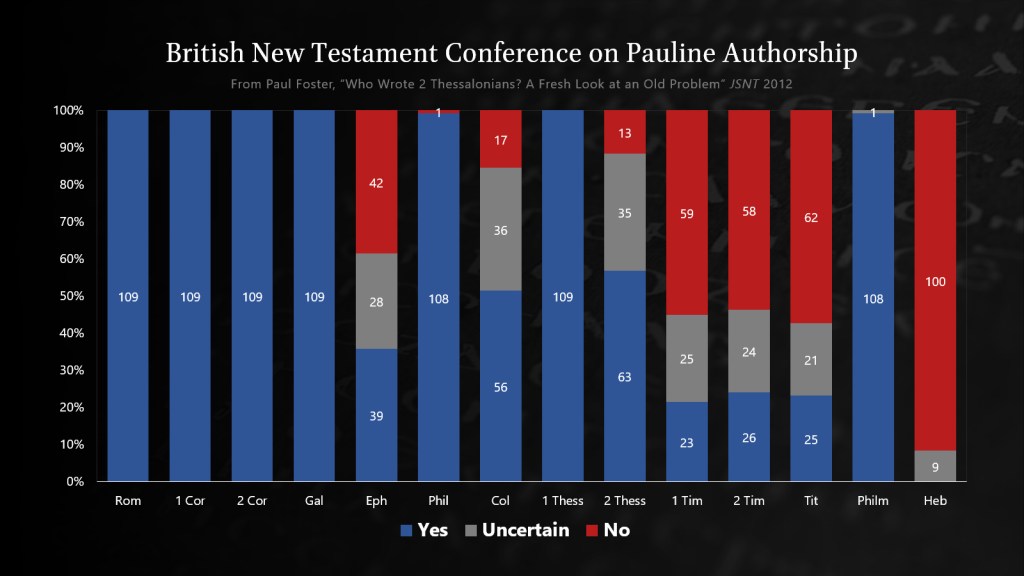
9. Paul didn’t write the pastoral epistles. They’re regarded as forgeries. Eject them from the canon already.

10. At some point, you must take accountability. Not letting the left hand know what the right hand is doing refers8 to charity. It wasn’t a call to ignorance. Look in the mirror. See what you have become—not becoming but have become. Something’s wrong. There is a cancer metastasizing, spreading, and killing everything that made you Christ-like. Seek treatment now . . . before it’s too late . . . I hope it’s not too late.

  1. This is an essay I wrote for class. The assignment was to write a “list essay” using Jason Reynolds’s “Ten Things I’ve Been Meaning to Say to You” as a mentor text. What follows is the result of that assignment. Enjoy? ↩︎
  2. Revelation 3:20. Now to be fair to this verse, it refers to the church in Laodicea. The author bears witness to a letter written to a church that is “lukewarm” and will be rejected by “the faithful and true witness, the origin of God’s creation . . .” Even as this church stands to be cut off, the letter writer knocks and calls with the promise that if their voice is heard and a response is made, then the letter writer will “come in and eat with (them), and (they) with (him).” ↩︎
  3. Genesis 2:15-17. ↩︎
  4. Philippians 2:12-13. ↩︎
  5. This is a reference to “Deny, Defend, Depose,” the words etched onto the bullet casings found at the United Health CEO’s murder scene. ↩︎
  6. Matthew 6:24. ↩︎
  7. This play on words refers to a story found in Acts 7. ↩︎
  8. Matthew 6:3. ↩︎

Does God Bring Out Our Best?

I was taught that the Christian God brings out the best in us, individually and corporately. If we follow God’s commands, arbitrarily selected and defined by Christian leaders, we will become a happy, loving, joyous people living in a happy, God-honoring society. Christians, as guides for the blind, were to seek out places of political power so we might lead the world to this imagined paradise on earth.

I used to believe this, but now I am less convinced, so much so that I have renounced my faith. Some of the most angry, miserable, hateful, and violent people I have met were faithful, church-going Christians. The politics of the Christian church in America has become highly authoritarian–less concerned with genuine communion with God and more concerned with controlling every aspect of life.

If the Christian God brings out our best and creates a community of love, then why are American Christians (Catholics, I’m including you, too) known not by their love but by their hatred and bigotry? Why do we see organizational Christian leadership and its laity participating in harming those identified by the Bible as “the least of these” (Mt 25.31-46). I believe it has to do with the intellectual dishonesty and inconsistency of American Christianity.

American Christianity, primarily American Protestant and White Evangelical Christianity, makes dishonest claims about the Bible itself. The Southern Baptist Convention (SBC), the largest Protestant denomination in the United States, formed in 1845 in Augusta, GA, as a response to slave-owning Baptists being disqualified to serve as missionaries, claims:

[The Bible] has God for its author, salvation for its end, and truth, without any mixture of error, for its matter. Therefore, all Scripture is totally true and trustworthy. It reveals the principles by which God judges us, and therefore is, and will remain to the end of the world, the true center of Christian union, and the supreme standard by which all human conduct, creeds, and religious opinions should be tried. (Southern Baptist Convention).

The SBC asserts that the Bible is “totally true and trustworthy,” yet it is filled with contradictions and errors. Consider the creation account in Genesis chapters 2 and 3. In chapter two, God says to Adam, ” ‘You may freely eat of every tree of the garden, but of the tree of the knowledge of good and evil you shall not eat, for in the day that you eat of it you shall die’ ” (Gn 2.16-17). God states clearly that on the day that Adam eats the fruit of the forbidden tree, he will die. However, in chapter three, the Serpent says to Eve, ” ‘You will not die, for God knows that when you eat of it your eyes will be opened, and you will be like God, knowing good and evil’ ” (Gn 3.4-5). When Eve and Adam ate the fruit, their eyes were opened. They were like God, knowing good and evil. What the Serpent tells Eve comes to fruition. The warning God gave to Adam, saying that he would die on the day he ate the fruit, proved to be a false and empty threat. God even confirms the truth of the Serpent’s words (Gn 3.22). God lied.

This example of God lying contradicts the proof texts Christians use to claim that God does not or cannot lie. One such proof text is Numbers 23:19. Balaam, a non-Israelite prophet, is called by Balak, king of Moab, to curse the people of Israel. When Balaam attempts to curse the Israelites, the Israelites’ God gives Balaam a message to deliver to Balak:

God is not a human being, that he should lie,
or a mortal, that he should change his mind.
Has he promised, and will he not do it?
Has he spoken, and will he not fulfill it?
See, I received a command to bless;
he has blessed, and I cannot revoke it.
He has not beheld misfortune in Jacob,
nor has he seen trouble in Israel.
The Lord their God is with them,
acclaimed as a king among them. (Nm 23.19-21)

God cannot lie, they say, but then he does. Inferred from this proof text, also, is the claim that God does not change their mind, yet we have examples of God changing their mind in other texts, such as in Jonah. In the story of Jonah, God instructs Jonah to tell Ninevah, “Forty days more, and Ninevah will be overthrown!” (Jo 3.4). There were no conditions. It was a statement. Forty days, and you’re done. When the people of Nineveh received this message, they repented, hoping to avoid destruction, and “God changed [their] mind about the calamity that [they] had said [they] would bring upon them, and [they] did not do it” (Jo 3.10).

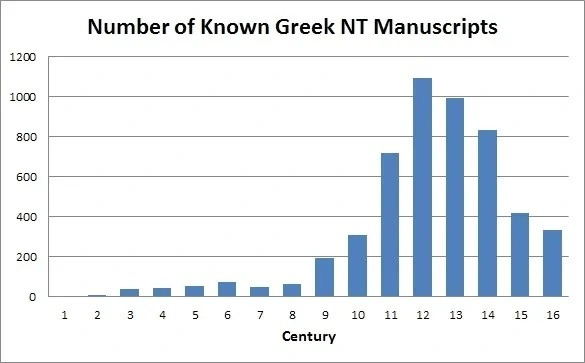
The Bible is not a single work that speaks with one unified voice but a collection of texts written by different authors for different purposes, audiences, and contexts. What one text says about God may–and does–contradict what another text says about God. This isn’t limited to the Old Testament. Textual critics and biblical scholars know the New Testament is filled with errors, additions, and omissions–some intentional and others not. Bible apologists will point out the thousands upon thousands of New Testament manuscripts available while neglecting that many do not agree, are incomplete, and developed hundreds of years after the account of Jesus’ death and resurrection.

Most scholars agree that Paul’s “Pastoral Epistles” are forgeries, yet Christians hold on to them. Perhaps it is because they like the power 1 Timothy gives men over women. Other Pauline letters are in dispute, yet Christians assert every word in the Bible is god-breathed.

How can God bring out our best if the book that Christians assert ought to be “. . . the supreme standard by which all human conduct, creeds, and religious opinions should be tried . . .” is filled with so many contradictions and errors? Consider also the millions of interpretations made by Christians regarding their own text. Their book is confusing and inconsistent for a God who is not the author of confusion (1 Cor 14.33, ESV).

Beyond the book, anecdotally, we see Christians behaving in the worst ways, from antisocial behavior to behaviors that are criminal and dangerous. The same SBC from which I drew the example about the Christian view of the Bible is the same SBC found to have a secret list of hundreds of pastors and church-affiliated personnel accused of sexual abuse (NPR, 2022). Only after the list was exposed did the SBC release it, offering questionable justifications for keeping it hidden and the sudden decision to release it to the public (McLaurin and Slade, 2022). The SBC is far from the only Christian organization diseased with allegations of sexual abuse and vile misconduct.

Christian organizations, such as the Heritage Foundation, advocate for political policies that prioritize the Christian religion and value structure in a country that guarantees religious freedom. They attack women’s healthcare, labor rights, and civil rights protections. They are developing and proposing–through their Republican cronies–policies that target the right of LGBTQIA+ individuals to exist in the public space (Project 2025). Their goals target and harm the most vulnerable communities in our society (Mt 25.41-46).

If Christians are the example of what their God desires from us, then I think they have demonstrated quite clearly, both presently and historically, that the Christian God does not bring out the best in us (Brucker 2014; Christianity and Colonial Expansion; Pahl 2010). On the contrary, this lying, lecherous, and murderous god seems to draw out our worst qualities.


Something Has to Change

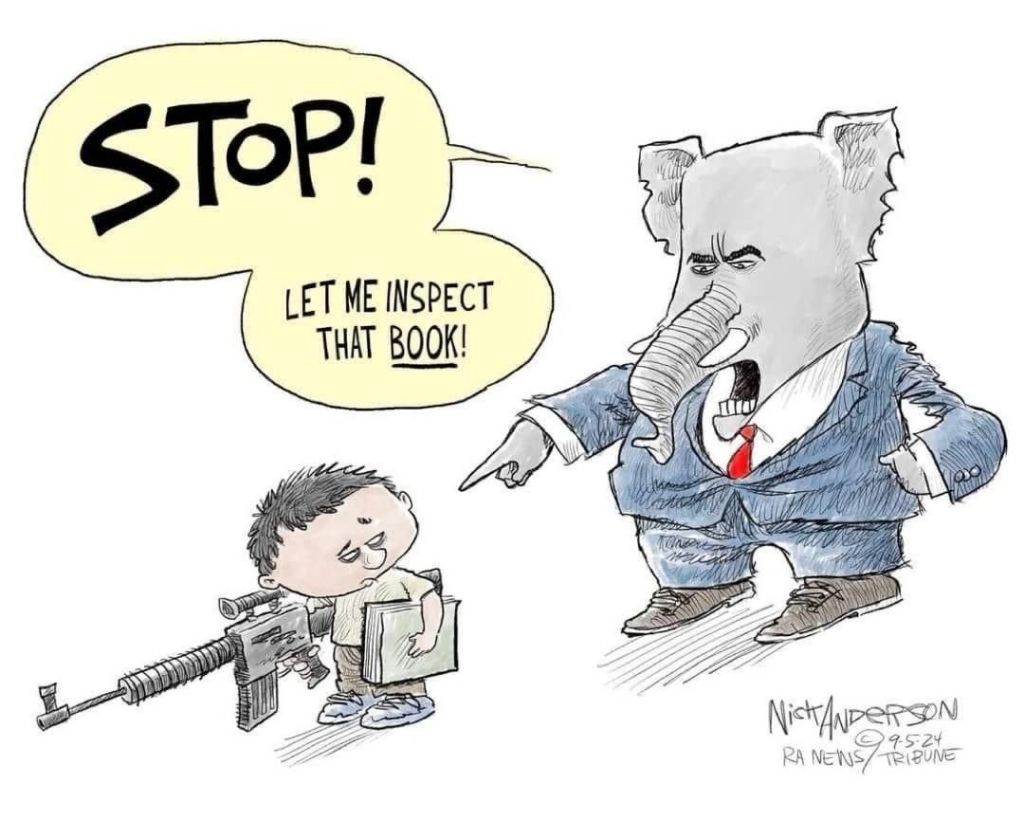
Nick Anderson | 5 Sep 2024

I’m tired. I’m so damn tired of watching a nation of knuckle draggers defend unfettered access to firearms and not the kids being killed by firearms legally obtained by those who ought not have access to them. The fourteen year old who killed four and injured at least 30 others used an AR-15 given to him by his father. The gift came shortly after the student was investigated for threats made against his school the year prior.

The moment we talk about common sense gun regulations similar to those required to drive a car—such as licensing and registration, health evaluations, etc.—the same knuckle draggers who demand extensive identification for those trying to exercise their right to vote cry out: “bUt ThE sEcOnD aMeNdMeNt!” Yet these same intentionally ignorant, peaked in high school stable geniuses piss on our right to free expression and our right to religious freedom (including freedom from religion). Many of them pose the solution that we “aRm ThE tEaChErS” when we can’t even find the money to keep school supplies in stock or pay our teachers a competitive salary.

While we are all guilty of hypocrisy in one form or another, the hypocrisy of this mouth breathing mass is literally killing our children. They’re worried that a student might read a book that exposes them to a world of ideas that might contradict the act of indoctrination they engage in with their kids. They are terrified of seeing queer youth being treated with dignity and respect. They are scared that students might see how many of our social, political, and societal systems are rigged against certain people groups—like women, the LGBTQIA+ and BIPOC communities, and the poor. Ideas scare them more than the inevitability of another school shooting.

Things must change.

And before anyone says this is “jUsT a FaCt Of LiFe,” we are the only country where this is a regularly occurring problem.

Things must change.

Microfiction: ‘Til We Have Faces

She whipped around, the scream still ringing in her ears. “Rachel? Rachel?”

The room fell silent. Her legs knocked against tables and chairs in the darkness. “Rachel? Rachel! Where are you? Please! Rachel!” Her stomach lurched and twisted. She abandoned all caution, all discretion, desperate to find her sister. Something soft caught her foot. She stepped back and cast the light from her phone towards the object.

Rachel’s severed face stared up from the floor, her body nowhere to be found.

Microfiction: Blood Brothers

“You’ve always been a selfish sonuvabitch.”

“Fuck you! You always thought you were better than me!”

“Until now, I was.”

One.
Two.
Three.

The gun exploded, a deafening staccato ripping through the malformed mockery. He felt no remorse. No pity. No regret. The thing writhed and screamed in his brother’s voice, but it stopped being his brother long before the infection, before the parasite took hold. He always knew it would end in blood between them.

Digital Notebook #1: Cultivating Genius Ch. 3 Reflection

Identity is composed of notions of who we are, who others say we are (in both positive and negative ways), and whom we desire to be . . . Our identities (both cultural identities and others) are continually being (re)defined and revised while we reconsider who we are within our sociocultural and sociopolitical environment. Idenity is fluid, multilayered, and relational, and is also shaped by the social and cultural environment as well as by literacy practices . . .

-Gholdy Muhammad, Cultivating Genius: An Equity Framework for Culturally and Historically Responsive Literacy (Scholastic, 2020), 67.

Who do our students see reflected back at them in the classroom? If identity is the dynamic dance between who we think we are, who others assert we are, and who we want to be, what music are we as educators using to facilitate this dance for our students in the learning environment? What does our lyrical content, rhythm, tempo, and melody tell the learning community about itself–or at least, confesses what we believe about it? Do we create harmony and space to build beautiful life-affirming crescendos, or do we play a cacophonous discord of developmental harm?

Arguably, identity is at the heart of the matter in the ongoing battles over curriculum and information access (i.e. book banning) in public schools across the nation. Curriculum that provide opportunities for students to “deeply know themselves and the histories and truths of other diverse people . . . ” and to learn “about the cultures of [others] . . . ” so that they might know “how to respect, love, and live in harmony with others who don’t look or know the world as they do”1 is under fire by those who have enjoyed a privileged identity reflected the archaic imagery of what once was considered the national identity.2

Some laws and political stances, such as those in Idaho, Tennessee, Florida, and other states, both reinforce the archaic national identity and its privileging as well as argue for a position that students are to wait until “college or adulthood to discover self for the first time.”3 These same practices suggest that student identity is defined solely by students’ parents or guardians until they become adults. These practices harm students and produce emotionally and intellectually stunted adults. While being emotionally and intellectually stunted and lacking a sense of identity is ‘fine’ for those insisting on such laws and practices, it is unhealthy and harmful to our students.

Within every classroom, a set of educational standards and objectives are laid out. The goal is literacy. By literacy, I mean more than reading and writing. I mean literacy as “connected to acts of self-empowerment, self-determination, and self-liberation” and the accumulation of knowledge and the use of skills “as tools to further shape, define, and navigate their lives.”4 However, “[before] getting to literacy skill development such as decoding, fluency, comprehension, writing, or any other content-learning standards, students must authentically see themselves in the learning.”5 It is vital that students see themselves as equal partners in an educational experience that aims to help them develop into educated and fully realized humans, rather than passive spectators gaining skills from the leftover scraps of those who have been privileged to be active participants.

This requires that I, as an educator, must first see my students. I must discover who they are and the assets they bring to the classroom through their diverse backgrounds, languages, and experiences. Every student carries with them “funds of knowledge”6 that can be leveraged to their advantage. It is up to me, and all educators, to tap into these funds to better reach and teach our students. Moreso, we can use these funds to reflect our students back at themselves in the classroom in ways that both increase their literacy skills and allow them to further develop their identity.

The music I wish to orchestrate in my classroom is one that will facilitate a healthy dance between the intersecting elements of identity. As my students learn to critically evaluate Texts,7 apply logic and reason, question, challenge, and build up the tools with which they will transform the world, I want them to see themselves and others through a lens of humanity. Some might argue that recognizing culture, language, gender-identity, ethnicity, and race are counter-intuitive to a human centered lens, but these fail to understand the multifaceted elements and experiences that make us human. Likewise, these elements inform us of the conditions and experiences of others–allowing us to take note and intervene when the life and well-being of our fellow humans are placed at risk. To be honest, I believe that it is the fear of our students’ understanding of humanity that motivates those who argue against our students’ access to education and information.

Education is liberation, and liberation threatens the status quo; it disrupts the power structure. If our students learn to authentically see and understand themselves, defended by a bulwark of education and literacy, then they will be much harder to control. They will be less likely to accept the identities thrust upon them by others. When students see themselves in the curriculum, when they discover how literacy can give shape to their identities and understanding of the world around them, I theorize they are more likely to buy into the work it will take to ultimately empower them to create their own paths and forge their own destinies.

———-
1. Gholdy Muhammad, Cultivating Genius: An Equity Framework for Culturally and Historically Responsive Literacy (Scholastic, 2020), 67.
2. The national identity is composed of the myths, legends, and edited stories of the United States that portray white Western, Judeo-Christian ideals and white men as the Paragons of America. Non-white and non-cis-heteronormative people are considered “lesser” or “less than” American when compared to white, cis, heteronormative, American men. This is reflected in cultural dog whistles, state and federal laws, policies and practices, and our societal institutions. Several texts are available which explore this issue in great detail, including: White Too Long: The Legacy of White Supremacy in American Christianity by Dr. Robert P. Jones, The Sum of Us: What Racism Costs Everyone and How We Can Prosper Together by Dr. Heather McGhee, Linguistic Justice: Black Language, Literacy, and Pedagogy by Dr. April Baker-Bell, Critical Race Theory: The Key Writings That Formed the Movement by Dr. Kimberlé Crenshaw, et. al., and many others. (Yes. I have read all of these texts, and I strongly recommend them them.)
3. Muhammad, Cultivating Genius, 67.
4. Muhammad, Cultivating Genius, 22.
5. Muhammad, Cultivating Genius, 69.
6. Norma Gonzales, Luis C. Moll, and Cathy Amanti, Funds of Knowledge: Theorizing Practices in Household, Communities, and Classrooms (Routledge, 2005).

7. By “Texts,” I mean capital “T” Texts. Texts refers to more that just the written word. It referst to all media, information sources, systems, policies, practices, life scripts, and every medium by which we come to know ourselves and the world around us.

Why I Teach . . .

Education is liberation. Too often, we are spoken to in the language of “can’t.” There are too many reasons why we “can’t” do something:

“No, you cannot be a musician.” “No, you cannot be an astronaut.” “No, you cannot find non-capitalistic solutions to homelessness, hunger, poverty, or violence.”

The reasons for the “can’ts” are often burdened by a sense of ‘the way things have always been,’ threats to the status quo, and fear—”play it safe; this is how you make money and live successfully.”

These burdens can be convincing because our society has been raised by generations of ‘intuitive thinkers’ rather than critical and reflective thinkers. The latter challenges the status quo and drives us toward innovation and progress; the former relies on whether a thing ‘feels’ true, and too often that feeling is underpinned by fear leading to pattern repitition and innovative paralysis.

I teach because I believe the world can be better. I teach because I believe students get just one life to live, and therefore, I owe it to them to equip them with the best tools and strategies that will allow them to make the most out of that one life. I teach because students need to know that their one life is not lived in solitude but interconnected with the lives and the world around them.

No student should be forced to limit their aspirations for the sake of “financial security.” Have you seen the economy? Groceries have gone up by 25%, surpassing the average 11% inflation rate because of unchecked and unfettered corporate greed—financial security is an illusion.

I want my students to know they can change the world and steer us toward a more inclusive and equitable reality where community and people are seen through a lens of humanity rather than our current lens of commodity.

Education is liberation, and our students deserve the freedom to be the best humans they can be. They deserve to live fulfilling, meaningful lives they can be proud of.

This is why I teach.

ACAB 210

We rebuke you
     in the name of

Sonya Massey,
Duante Wright,
Andre Hill,
Manuel Ellis,
Rayshard Brooks,
Daniel Prude,
George Floyd,
Breonna Taylor,
Atatiana Jefferson,
Aura Rosser,
Stephon Clark,
Botham Jean,
Philando Castile,
Alton Sterling,
Freddie Gray,
Janisha Fonville,
Eric Garner,
Michelle Cusseaux,
Akai Gurley,
Gabriella Nevarez,
Tamir Rice,
Michael Brown,
Tanisha Anderson,

and in the name
of every Black brother and sister
taken from us

by your hands.

A Picture Worth a Thousand Words

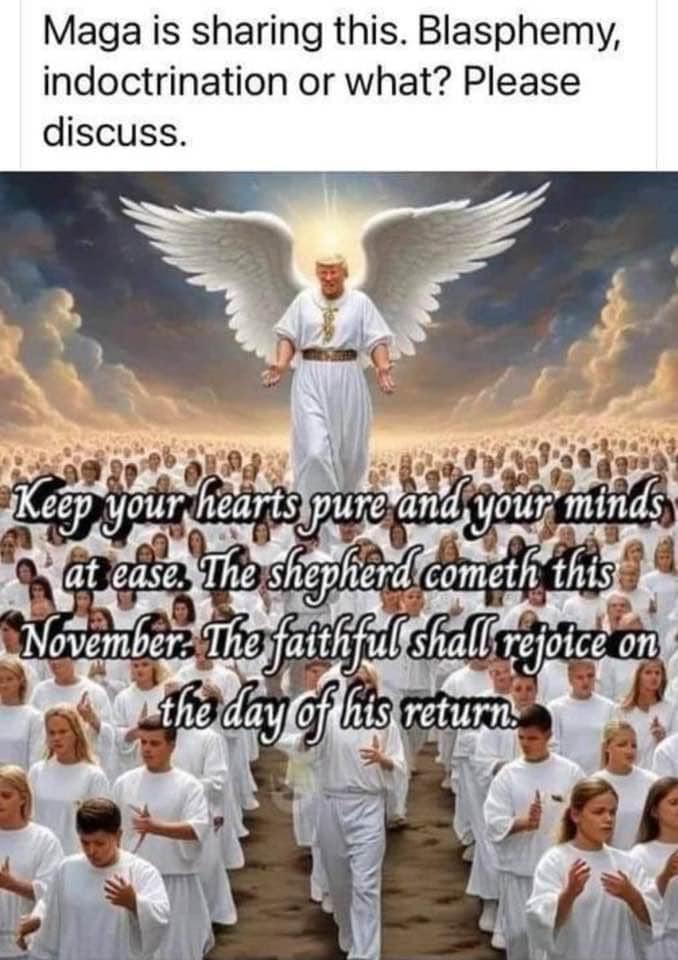
This is but one of many images that should alarm us about the movement and motivation of the MAGA cult. Even if you hate the current president, consider what the next president means in terms of the Supreme Court of the United States and the rights of every American. The image itself presents an army of white saviors who come to rescue America from non-white, non-heteronormative, and non-Christian peoples and values, paving the way for their ‘superior’ vision to be made manifest. This image tells us who is to be empowered, who is to dictate the way in which people may (or may not) live, and with whom they have aligned themselves to force their will on the rest of us.

This image is reflective of the whiteness permeating throughout MAGA culture. It reflects the rhetoric of hate groups like Christian Identity, what’s philosophy has further poisoned and co-opted Christianity to justify and perpetuate white supremacy. Consider what is said, implied, and left unspoken in the phrases “Take America Back” and “Make America Great Again.” Economic and border security, which they often argue, resonates with the same spirit as “States Rights” being touted as the ‘reason’ for the Civil War and the secession of the South. In truth, however, just like the ‘States Rights’ argument, the presented reasoning is bullshit. It is about maintaining white Western ‘Christian’ dominance and the power to oppress, marginalize, and harm others for their personal gain.

This image likewise reflects the current move to seize control of America (Project 2025) and is reminiscent of the white Christian response to the Civil Rights Movement of the 1960s and 1970s that led to the rise of the “Moral Majority” and the election of both Ronald Reagan (whose neoliberal policies have destroyed our economy) and George Bush, Sr.

It is a call to action that leverages Christian Nationalism and Christofascism as justification for the means used to achieve their ends. This is, in part, indoctrination for the younger generation suffering under these knuckle draggers and a marker of the zealous fervor present in the far-right extremist movement.

This image, and those like it circulating the internet, should be a reminder of the importance of talking with our friends and family about what’s at stake in the upcoming election. They don’t have to like Biden, but they should consider the Supreme Court appointments that will inevitably happen under the next President and what that means for the rights and liberties of all Americans.

Whatever your thoughts on the above image, remember to get out and vote this November! Our democracy is at stake.

I Don’t Forgive You

I don’t forgive you
because you taught me
forgiveness erases the past.
It makes everything right,
and if it’s not,
it’s the fault of the forgiver,
who then becomes unworthy
of giving or receiving
forgiveness.

I don’t forgive you
because you taught me
forgiveness erases all boundaries
and if I want boundaries,
then I didn’t really forgive you,
and if I don’t forgive you,
then I don’t love God,
and if I don’t love God,
then I’m a sinner,
and if I am a sinner,
then I am just as wrong as you,
and therefore,
I am unworthy
of giving or receiving
forgiveness.

I don’t forgive you
because you don’t believe

you’ve done anything
that needs

forgiving.

Beautiful Crow

The sky is a polished blue,
wearing her softest white clouds.
She makes love to the sun in front of God
and everyone.
The earth blushes
in brilliant emerald breath
held beneath sapphire eyes,
and yet,
it is the lonely cawing crow
with whom I sympathize.
Its call,
ragged and worn,
lingers in the rhythm
beating inside my chest,
trying to make sense
of a world so big,
yet so small—
like humanity’s capacity for love
and its proclivity to hate.

They Said ‘No’ to Our Voice

The U.S. House of Representatives voted to ban TikTok yesterday. An 81% consensus, 81%! POTUS has said that he would sign the bill into law should it get through the Senate.

Our political representatives can’t come together to tackle healthcare, corporate price gouging, the housing crisis, poverty level wages, college loan debt, the border question, food insecurity, or work toward investing in our nation, its people, or its future. The moment 170 million Americans began talking to each other, however, realizing we weren’t alone and that we could change things, then they acted—to divide our voices.

They said ‘no’ to our voice.

(in)Justice and Monsters

Monsters lurk the lines of my fiction because it is how I cope with a world on fire. I remember as a child learning about the Civil Rights Movement and thinking, “why did that happen? Why did they hang those people? Why did they kill that man speaking up for justice?” I was confused but assured “it was over. Justice won.”

It’s not over. It never ended. The problems of inequality and injustice persist, not only for Black people, but for non-white, non-heteronormative, non-Christian, non-conservative humans. More people are pushing back, demanding justice, but those in power, the same who murdered MLK, Jr., Medgar Wiley, Lemar Smith, Harvey Milk, and countless more, have reignited the fires of hate motivated violence in an attempt to end the push.

For many years, I was ignorant of the unfathomable depth of inequality and injustice in America. I was naive, and so surprised by the number of voices rising to the provocation of power—not to resist that wicked power, but to uphold its scaffolding and institutions, to protect the bloodied hands of the powerful.

Comedian, playwright, and novelist Ben Elton once said: “With privilege comes responsibility, you must understand that.” I wonder if this is why so many disenfranchised people are rising up to protect and defend the atrocities of the powerful. They have benefitted from the current institution. They are privileged in this arrangement, and so they feel it their responsibility to uphold it—ignorant of how the same system is also killing them.

After two decades of work, I have become conscious of my privilege, but my responsibility—my duty—is not to the system, not anymore. My obligation is to humanity. I do what I can to ease suffering in small and seemingly insignificant ways, but these little acts add up quickly.

If we could do our small part together, at once, the impact would be a stone in Goliath’s brain. We would rock the world. Imagine, for one week, we refused to participate in capitalism—get only the barest of essentials from the most ethical businesses. It would be a strike at the wallet of power. They’d feel it. Now imagine if we maintained that pressure.

Right now, orcas in the middle of the ocean are sinking the yachts of the wealthy. It is an ironic twist to witness whales campaigning to “Save the Humans.” Truly, things are far worse than we realize. But if the whales can do their part, should we not do ours?

The monsters wandering between page and pen are how I cope with a world on fire. These creatures can be stopped. Their objectives can be disrupted and subverted. I can save the world from them, but the real monsters, those monsters can only be stopped if we work together.

Deep State Files: The Vaccine

I was forced to receive the devil’s juice just before it was released to the public. I was part of a Deep State Disinformation Task Force sent to undermine the effectiveness of Hydroxychloroquine. We knew Hydroxychloroquine was effective against COVID-19, but we needed the public to buy into our “vaccine.” What we were given wasn’t the same as what we gave the public. We had all been deceived.

Days after I received Beelzebub’s Bottom Sweat, I began seeing things—people—no one else could see. I heard things no one else could hear. A collective tortured cry seemed to persist in the distance, always lingering just over the horizon. Soon I was visited by a strange being that revealed the “vaccine” had sealed my soul for the great archangel, Lucifer.

In exchange for my soul, the being had imbued me with the ability to see through the veil and into the lands of the dead. All I see, all I hear, are the tortured souls forsaken by God, a perpetual reminder of what awaits me in the next world. Everyday, death haunts me. It looms over me with the promise of hopelessness and despair.

My body has begun aging at an accelerated rate. The only things slowing the acceleration are COVID-19 boosters and the crushed skulls of aborted fetuses. If I could go back and do it all over again, I would have gone outside at the height of the pandemic and licked every handrail just to prove to science that God rules and the devil drools!

But I can’t go back.

All I can do is tell my story and hope it might save you.

Ask Jesus to come inside you and leave the devil at the door.