
I was taught that the Christian God brings out the best in us, individually and corporately. If we follow God’s commands, arbitrarily selected and defined by Christian leaders, we will become a happy, loving, joyous people living in a happy, God-honoring society. Christians, as guides for the blind, were to seek out places of political power so we might lead the world to this imagined paradise on earth.
I used to believe this, but now I am less convinced, so much so that I have renounced my faith. Some of the most angry, miserable, hateful, and violent people I have met were faithful, church-going Christians. The politics of the Christian church in America has become highly authoritarian–less concerned with genuine communion with God and more concerned with controlling every aspect of life.
If the Christian God brings out our best and creates a community of love, then why are American Christians (Catholics, I’m including you, too) known not by their love but by their hatred and bigotry? Why do we see organizational Christian leadership and its laity participating in harming those identified by the Bible as “the least of these” (Mt 25.31-46). I believe it has to do with the intellectual dishonesty and inconsistency of American Christianity.
American Christianity, primarily American Protestant and White Evangelical Christianity, makes dishonest claims about the Bible itself. The Southern Baptist Convention (SBC), the largest Protestant denomination in the United States, formed in 1845 in Augusta, GA, as a response to slave-owning Baptists being disqualified to serve as missionaries, claims:
[The Bible] has God for its author, salvation for its end, and truth, without any mixture of error, for its matter. Therefore, all Scripture is totally true and trustworthy. It reveals the principles by which God judges us, and therefore is, and will remain to the end of the world, the true center of Christian union, and the supreme standard by which all human conduct, creeds, and religious opinions should be tried. (Southern Baptist Convention).
The SBC asserts that the Bible is “totally true and trustworthy,” yet it is filled with contradictions and errors. Consider the creation account in Genesis chapters 2 and 3. In chapter two, God says to Adam, ” ‘You may freely eat of every tree of the garden, but of the tree of the knowledge of good and evil you shall not eat, for in the day that you eat of it you shall die’ ” (Gn 2.16-17). God states clearly that on the day that Adam eats the fruit of the forbidden tree, he will die. However, in chapter three, the Serpent says to Eve, ” ‘You will not die, for God knows that when you eat of it your eyes will be opened, and you will be like God, knowing good and evil’ ” (Gn 3.4-5). When Eve and Adam ate the fruit, their eyes were opened. They were like God, knowing good and evil. What the Serpent tells Eve comes to fruition. The warning God gave to Adam, saying that he would die on the day he ate the fruit, proved to be a false and empty threat. God even confirms the truth of the Serpent’s words (Gn 3.22). God lied.
This example of God lying contradicts the proof texts Christians use to claim that God does not or cannot lie. One such proof text is Numbers 23:19. Balaam, a non-Israelite prophet, is called by Balak, king of Moab, to curse the people of Israel. When Balaam attempts to curse the Israelites, the Israelites’ God gives Balaam a message to deliver to Balak:
God is not a human being, that he should lie,
or a mortal, that he should change his mind.
Has he promised, and will he not do it?
Has he spoken, and will he not fulfill it?
See, I received a command to bless;
he has blessed, and I cannot revoke it.
He has not beheld misfortune in Jacob,
nor has he seen trouble in Israel.
The Lord their God is with them,
acclaimed as a king among them. (Nm 23.19-21)
God cannot lie, they say, but then he does. Inferred from this proof text, also, is the claim that God does not change their mind, yet we have examples of God changing their mind in other texts, such as in Jonah. In the story of Jonah, God instructs Jonah to tell Ninevah, “Forty days more, and Ninevah will be overthrown!” (Jo 3.4). There were no conditions. It was a statement. Forty days, and you’re done. When the people of Nineveh received this message, they repented, hoping to avoid destruction, and “God changed [their] mind about the calamity that [they] had said [they] would bring upon them, and [they] did not do it” (Jo 3.10).
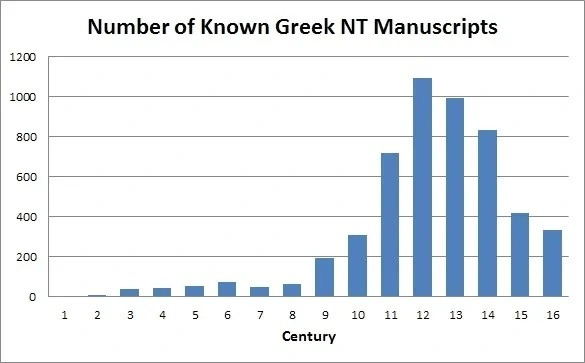
The Bible is not a single work that speaks with one unified voice but a collection of texts written by different authors for different purposes, audiences, and contexts. What one text says about God may–and does–contradict what another text says about God. This isn’t limited to the Old Testament. Textual critics and biblical scholars know the New Testament is filled with errors, additions, and omissions–some intentional and others not. Bible apologists will point out the thousands upon thousands of New Testament manuscripts available while neglecting that many do not agree, are incomplete, and developed hundreds of years after the account of Jesus’ death and resurrection.
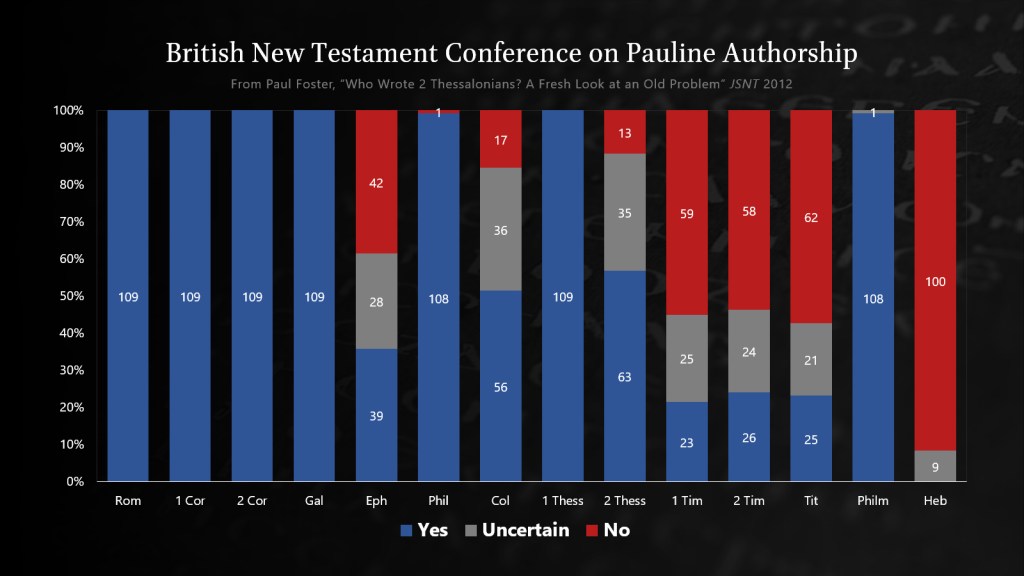
Most scholars agree that Paul’s “Pastoral Epistles” are forgeries, yet Christians hold on to them. Perhaps it is because they like the power 1 Timothy gives men over women. Other Pauline letters are in dispute, yet Christians assert every word in the Bible is god-breathed.
How can God bring out our best if the book that Christians assert ought to be “. . . the supreme standard by which all human conduct, creeds, and religious opinions should be tried . . .” is filled with so many contradictions and errors? Consider also the millions of interpretations made by Christians regarding their own text. Their book is confusing and inconsistent for a God who is not the author of confusion (1 Cor 14.33, ESV).
Beyond the book, anecdotally, we see Christians behaving in the worst ways, from antisocial behavior to behaviors that are criminal and dangerous. The same SBC from which I drew the example about the Christian view of the Bible is the same SBC found to have a secret list of hundreds of pastors and church-affiliated personnel accused of sexual abuse (NPR, 2022). Only after the list was exposed did the SBC release it, offering questionable justifications for keeping it hidden and the sudden decision to release it to the public (McLaurin and Slade, 2022). The SBC is far from the only Christian organization diseased with allegations of sexual abuse and vile misconduct.
Christian organizations, such as the Heritage Foundation, advocate for political policies that prioritize the Christian religion and value structure in a country that guarantees religious freedom. They attack women’s healthcare, labor rights, and civil rights protections. They are developing and proposing–through their Republican cronies–policies that target the right of LGBTQIA+ individuals to exist in the public space (Project 2025). Their goals target and harm the most vulnerable communities in our society (Mt 25.41-46).
If Christians are the example of what their God desires from us, then I think they have demonstrated quite clearly, both presently and historically, that the Christian God does not bring out the best in us (Brucker 2014; Christianity and Colonial Expansion; Pahl 2010). On the contrary, this lying, lecherous, and murderous god seems to draw out our worst qualities.

 Void Engineer