The Science of Smaller Plates

a commentary on evangelical diet culture and its assault on women.

Smaller plates
mean smaller meals.
Smaller meals
for that smaller you
because they told you
the best you,
the ideal you,
God’s design for you,
is a smaller,
lesser,
wasting away you.
A smaller you,
they say,
is a prettier you,
a more fuckable you,
and a more fuckable you
is the whole reason
God made you.
A holy,
fuckable,
baby making you
because if men
can control themselves
around you,
then you are failing
to honor the purpose
god gave you.

Is It?

The gun rang out.


One.


Two.


Three.


Four.


Four shots tore through her chest. All five feet, seven inches of her crumpled to the ground. Blood soaked the moonlit shore as the lake lapped at her flesh. The boy stood, tears streaming down his cheeks, gun still trained on the fallen woman, breath caught in his throat.


“It’s over.” He exhaled.


“Is . . . it?”


Her body convulsed, bones snapping out of place, limbs twisting and elongating. She rose like water and held him in two fathomless pools. Her jaw popped and jerked, unhinging itself, mouth stretching unnaturally wide revealing row upon row of jagged teeth. The dead woman bellowed a scream so primal the boy collapsed to his knees, sobbing.

“No need to cry, boy.” Her voice was like a skittering swarm of roaches. Her laugh like an electric guitar. She towered over the child and whispered, “Now, come to mommy.”

The Rapture

dedicated to Calvary Chapel Hanford

You promised us a rapture.
You said,
‘no one knows the day
or hour,
but the prophecies are aligned,
so any day now.’

But—

It’s been thirty six years.
You’re still looking up.

Maybe God slept in.
Maybe he’s not coming.
Maybe its time to find
something else
to pour your heart into—

like people.

Your Father the Devil

Your god
points to a mass grave
where tangled Palestinian bodies
gasp for breath,
a gospel
of bullets and bloodshed
brought to bear
upon the least of these.
He is a white AR-15
mowing down children
in the second grade
while fucking little girls
of the same age—
a coward
accusing queer communities
of crimes committed
by his pastors and priests.
Your god
is an idol,
created in the likeness
of your hate.

But Grace

is a headstone
bearing your names,
buried in a landfill
for which
none of us
mourn.

An Ode to Garry

I pray you slip in the shower,
and no one finds you.
I pray you get drunk
and think,
‘I can make that jump.’
I pray you walk off into the sunset
and disappear,
forever.
I pray your birthdays
are full of empty chairs.
I pray you never receive a visit
from the ghosts of past, present, or
future Christmas.
I pray you choke on air
and die—
before deleting your browser history.
But most of all,
I pray
whatever happens,
happens quickly.

The Real Santa

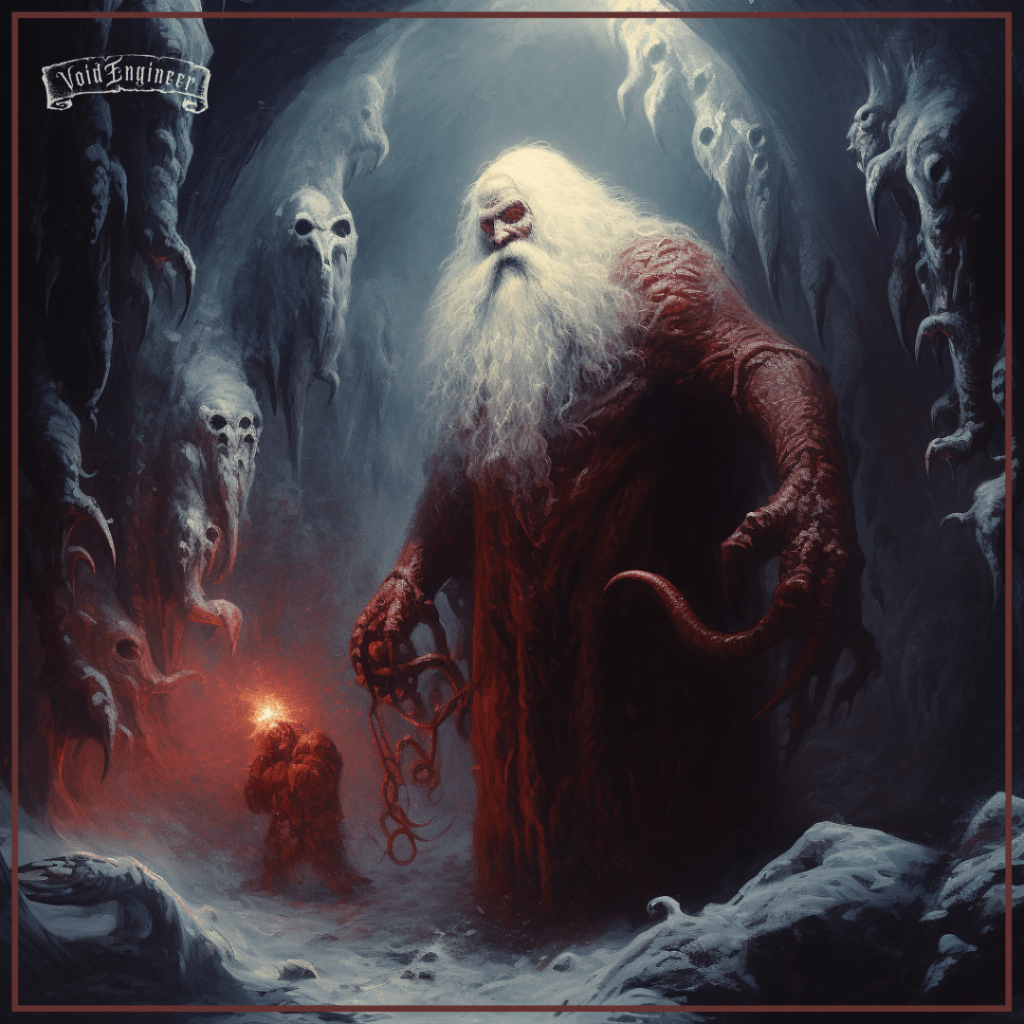
He is neither kind nor jolly. Every year he enters the homes of especially unruly children and snatches them up, leaving behind no trace or memory that they had ever existed. By night’s end, with his sack full of naughty children, he slinks back to his lair to gorge himself. When the last child is devoured, bones and all, he falls into a deep sleep for another year, with none of us the wiser.

Until now.

god

“You were so enamoured.
You couldn’t see it
for what it was.
Its brilliant light blinded you.
Convinced you that your hands
labored in love.

But look for yourself.

This blood,
these bodies,
your hands.
Your work.”

“But, sir,”
He spoke,
“how were we to know?
You saw it.
It’s power.
It’s beauty.
How were we to know
It wasn’t God?”

“See these bodies?
See this blood?”

Family Burial Plots

When my mother passed away in 2006,
the entire family followed suit. Not
physically as she had, but in a way that
was psychically similar. A parade of
skeletons marched out of the family
closet playing “When the Saints go
Marching In,” and we found none of us
were in that number.

They say you can’t take anything with
you when you die. Not true. My mother
took with her the gossamer veil spread
over the deep wounds carved into our
family tree by a father’s rage.

We all died that day.

The Boy, The Bear, and The Woods

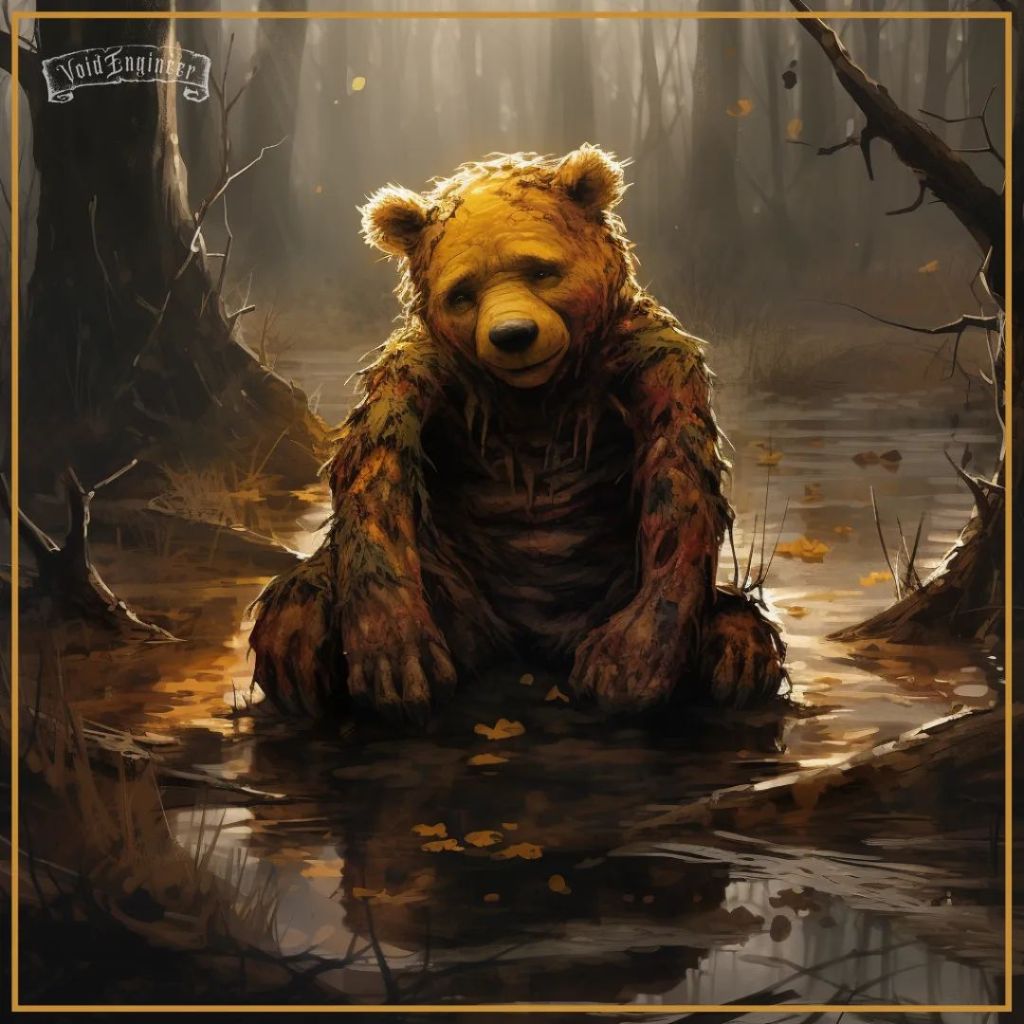
The Hundred-Acre Woods had changed in the wake of Christopher Robin’s disappearance. Pooh blamed himself—if only he held on for just a little longer. No one else blamed him. No one could have stood against those awful impossible things. He did everything he could, but guilt broke him, changed him.

In the aftermath, Pooh was found deep within the shadows of the forest, stuffing spilling out of grievous wounds. Had he been a real bear, he wouldn’t have survived. Pooh, however, like his friends, weren’t real—not in the conventional sense—but play things brought to life by the ancient spirit of the woods for a little boy who sought solace among her twisted and gnarled branches.

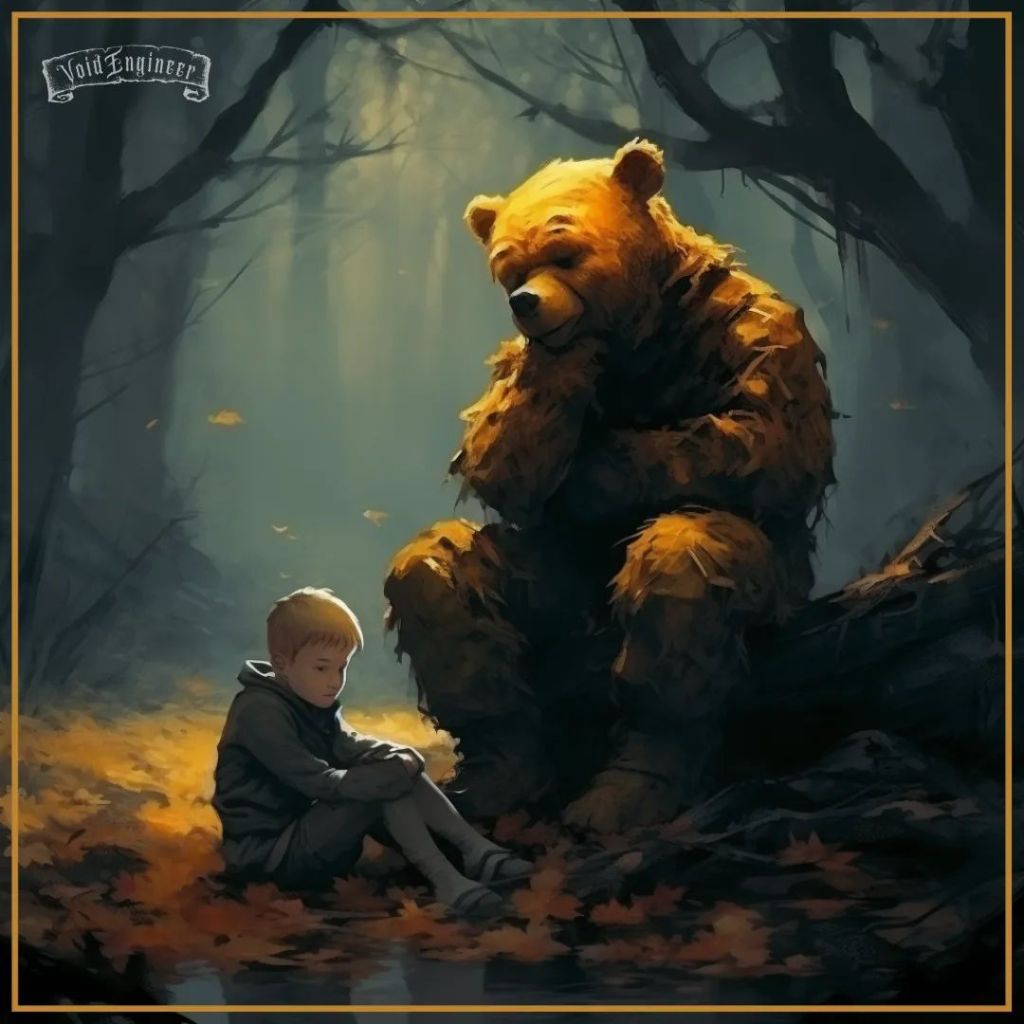
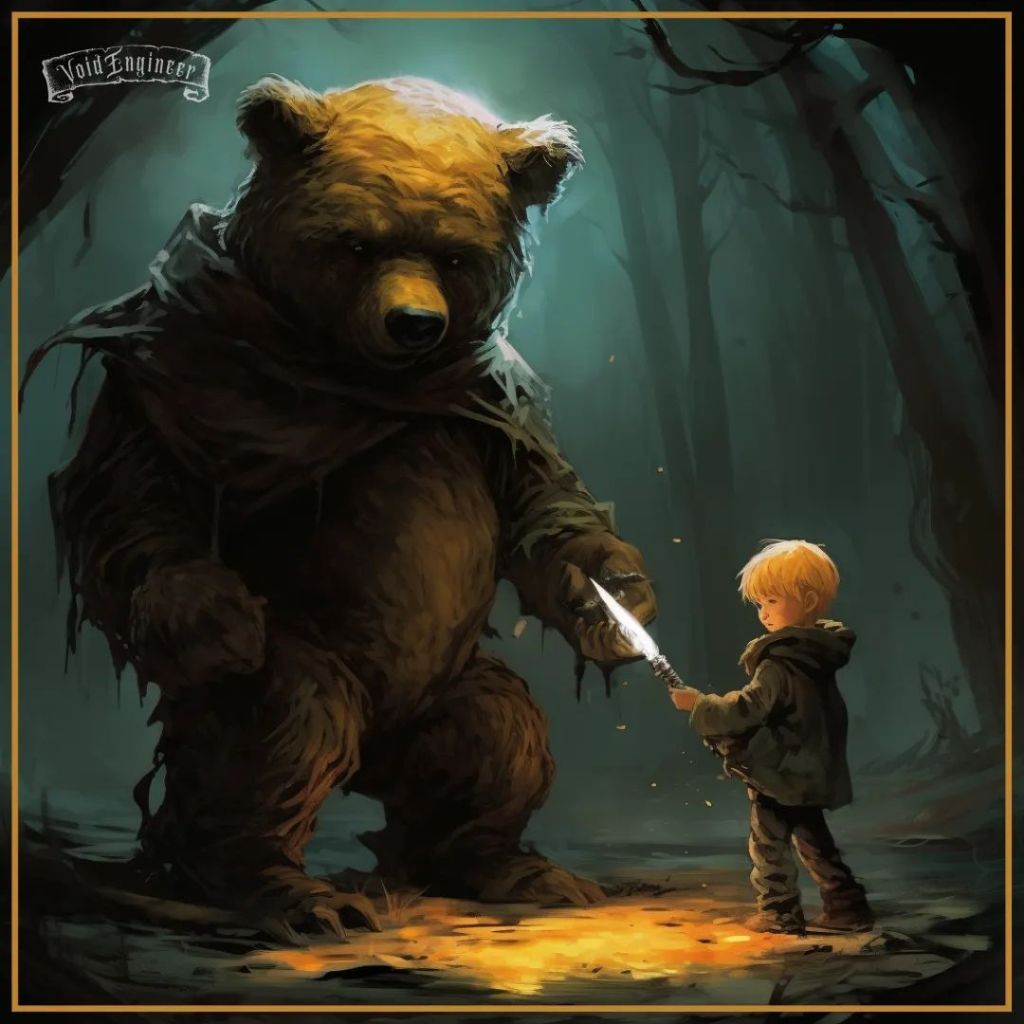
Through them, she was able to love the cast out child. He had been brought to die, but his courage and wonder evoked sympathy from the spirit, and she vowed to watch over him. Pooh, Piglet, Owl, Tigger, and all his new friends guarded and taught him the deep secrets of the Hundred Acre Woods. That which inspired fear in the hearts of men, that unconsciously drove them to give wide berth to the forest, was to him, a friend.

Of all his friends, it was Pooh that loved him most, with same heart of the ancient spirit. In turn, the child loved Pooh above all others, and for a time, before the horrors which now stalked the woods, they were happy. But that happiness had long since vanished with the boy. After thirteen years, Pooh had given up on ever finding the child and turned his rage toward the things stalking the dark places of the forest, corrupting its woods, and poisoning the ancient spirit that birthed him.

In the Beginning

He had grown old and fat. Time had been unkind, and he felt its weight upon his shoulders. He looked down once more at the package that had been delivered only hours ago—a key, a deed, and a death certificate bearing his father’s name. The voice of his father, it seemed, rose from its hellish resting place to mock him, enjoying one final laugh at his expense.

“Fool, bastard.” He said. “I’m too old for this—and so were you. Or, at least, you should have been.”

Letters to the Dead

There were days I wrote you
out, dropped you like a feather
and ran. I’d hoped to leave you
behind me, but you were my
favorite quill. The very worst
of my Hell.

I always come back for you,
to dip you in the murky eyed
ink called memory. Even now,
I write your name across the
breadth of these wrists, hoping
to set free all this bitterness.

Some say I keep your ghost
alive in letters left by your
graveside, but this ink
reminds me why I left home—
to exorcise you and them
from my bones.

The Prophet to the Pastor

In the hard places where bread
becomes stone and crowns
become thorns, there I wander
the palm lined pathways, leading
to the debt you have yet to forgive.
It is exhausting trying to keep up
with you and the nails you drive into
the hands holding out for mercy.
I suppose Grace is just a name
you give your daughters to pretend
you do all this—for Jesus.

But in spite of it all, I still wander,
smuggling in an orchard where
bodies no longer burden the
outstretched olive branches I offer
to those whose backs I buried
beneath broken boughs and
splintered words.

Someone has to sweep the
manger clean. You never know
what displaced souls might need
to rest, like an infant pauper king
held in the bravery of his mother’s
breasts, or a Palestinian leper
just trying his best to survive
the brutality of a Gaza stripped
of its rest.

This world is too hard. We have
forgotten how to make room for
love to thrive. We salt the earth and
examine splinters with wooden eyes
underneath the neon glow where hangs
a miracle whipped Jesus, who holds
a sign that reads: ‘God is love, but he
has his bad days, too.’ If what
you say is true, then God has just as
many bad days as we do.

There has got to be a better way
to make our days brighter—
like bringing in more chairs
and making room for everyone
at the inn, or finding ways to love
the face of God staring back at us
through the eyes of our neighbors—
every neighbor, not just the ones
who gather on cute sing-along
Sundays. All of them. But especially—

especially the ones we’ve crucified
in full view of the Son.

Ode to Calvary Chapel

The Moses model was established to give the pastor
complete control because Chuck Smith did not like
to hear the word ‘no.’ And so followed suit his cult of
imposter pastors who wielded power accountable ‘only
to the Lord.’ Such a strange interpretation falling outside
all models for the Church, but for them, it worked—to
keep the flock in line. Under-shepherds too quick to
identify with Jesus and not the Judas in themselves.
I condemn it. The bath, the water, the baby—all of it.

Strange were the men, never women, who assumed
the role of pastor. Charismatic, arrogant, filled with
all manner of pride, but—they say—holy, and to say
otherwise, was to Divide—division is the greatest sin you
can commit outside of being gay, or a woman who lost
her virginity before marriage; these men were always in
our pants. They were always in our lives pointing our
eyes to distant stars while picking our pockets for their
con—Jesus is coming, they still say, and every earthly
strife is a sign.

We waited. We watched. Jesus never showed up—to
a single Sunday service. Probably because they did
so little serving beyond themselves. Riding the coat
tails of every Evangelical pearl clutch, they stoked the
fears of the flock inside the lines drawn in the sand
between them and everyone else—us versus them.
Them, a euphemism for non-Calvary Chapel believers,
the unsaved, the unclean, the Black, the Brown, the
Other—and especially the misfits who were a misfit
for the cross-shaped coffins they’d stuff us into, like
Lonnie Frisbee who first brought the youth. Lonnie,
who gave Chuck his start. Lonnie, who they threw
away when he couldn’t stop being gay. Lonnie, who
Smith and Laurie claimed repented on his deathbed.
We know they are lying.

Chuck is gone now, I wish Laurie was, too, but his
legacy lives on in the broken bodies beaten down
by illiterate men who use the Bible as a weapon, God
as a scapegoat, and Love as reason to hate. And there
was so much hate.

I condemn it. The bath, the water, the baby—all of it.

We Are Yet Ghosts

We speak like ghosts to keep alive
the cemeteries buried in our throats
because, even after all this time,
there are still some things we are not
yet ready to let go—like the hatchet
we use to open up old wounds. We
confuse mausoleums for museums
where in place of paintings we hang
like criminals. Our skeletons are on
full display, broken and unclean. Both
of our hands are bloody.

While you’ve lingered in that old house,
haunting its halls like a presence known
only by trails of sunflower shells and
the phantom drones of imaginary flight
patterns, I have clawed my way through
the dirt to rise above the earth to find
my way from death to life. I do not yet
know if it is too late for you, but I have
exorcized your demon from my soul,
and one day, hopefully, I might finally
let go.

We Never Wanted to Look

Based on true events.

A black student, resolved never to let them
make him feel lesser, is expelled when he
stuffs slurs back into the mouth of some
privileged white kid. The white kid finds a
rally coming to his aid, pouring out
sympathy for the injuries delivered by the
savage, the tiger, the animal, the thug he
provoked—they’re just so loud and violent.

In the same breath, kids on the football
team reenact the brutal qualities of their
fathers as they wrap stones in sheets of
paper and chuck them at the queer kids
when the adults aren’t watching, and I
swear, these mother fuckers are never
watching. This way, when the queer kids
open up their wrists in the hope of ‘better
luck next time,’ the adults can claim they
never saw it coming.

In a classroom, Mr. Peterson, a nominally
qualified science teacher, tells the
brown kids that systemic racism is a lie—
racism, he tells them, ended with the
civil war, biology was settled in six days,
and the most important question you can
ask yourself is: is there life after death? I
wonder if he knows the number of kids
racing to uncover the answer because of
people like him.

The spirit of cruelty is alive and well, here.
Cultivated by a system and culture caught
up in the march of June 1929, when over
three-hundred klansmen made their way
down Draper Street to insist this small
town is for whites only—with the exception
of that one black family they allow to live
on the outskirts to prove to the world that
they’re not just a bunch of bigots.

Broken mirrors and skipping records have
a lot in common with this place. We are unable
to see ourselves with any honesty,
unable to get up and change that goddamn
minstrel tune we’ve been playing since
1873. We’re afraid to look up because the
trees have eyes. We know this because we
hung them there, like the brown Christ we
nail to a tree annually, on every Good
Friday. Is it a wonder, then, that the image
of breaking the shells of rainbow colored
eggs is lost on us?

Look, there are a lot of things you can try
in our small town, just not love or
compassion or mercy or acceptance,
because that—that is just some anti-
American, communists bullshit, and we
don’t take kindly to that sort of thing
around here.

I’m The Imposter

Listening to the cadence in your voice
lets me know that even the best have
their bad days. You can’t be on all the
time—I know that—but the sound in
your throat throws me. It makes me
believe magic is unlimited for those
who know how to tap in. Teach me
how to tap in.

I feel like a fraud standing next to you
and him and her and every one of them
who can sing, and my god, can they sing.
Octaves of grace that move me like a
choir lifting its broken voice in defiance
of God. Meanwhile, I just hope that I can
make a joyful noise.

Summer of 2021

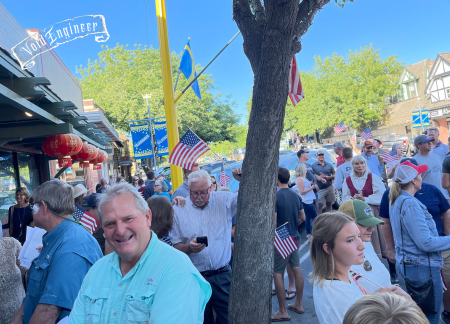
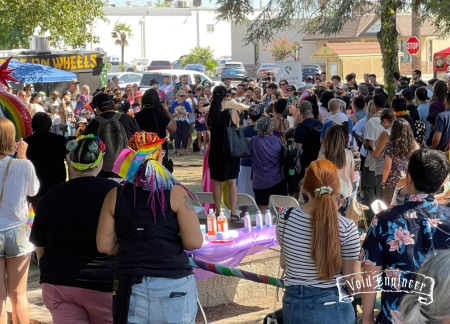
This photo still enrages me. I took it in the summer of 2021 outside Kingsburg City Hall. The sea of, mostly, older white faces, armed with American flags, Bibles, and an illiterate understanding of American history were joined by far-right hate groups such as the Proud Boys, 1776ers, and others, to oppose a Pride Month proclamation in the City of Kingsburg. The grueling three-hour spectacle saw these “patriots” engage in anti-patriotic and dog-whistle-laden rhetoric.

The American flag was weaponized and used in a manner not dissimilar to the symbols of hate waved about by white supremacist hate groups. In a display of irony, many of these white (and Evangelical) individuals spoke to the American flag as being all inclusive while actively seeking to exclude what they understood to be a social other, an enemy of America. Several opined they would be called bigots as they spewed bigoted speeches to oppose recognizing Pride month in their small town.

I couldn’t help but notice how many referred to passages in the Bible with the same fervor of those who had once used scripture to justify segregation, bans on interracial marriage, to stand against feminism and the right to vote for women, justify slavery, ignore police brutality and murder, etc., etc., etc. It was the same tired arguments to scapegoat their little god as the source for the hate they called love.

Others appealed to a slippery slope argument, claiming that allowing the Pride flag to be flown would cause all manner of requests for other flags to be flown. This argument, of course, is born out of ignorance. First, such requests are not being made. Second, the only ones who seemed to want to fly other flags were those who came to oppose both Pride Month and the flying of the Pride flag–and the flags they proposed were ones of hate and intended intimidation–the same sort of bullshit that saw statues of Confederate generals and figures erected all across the south during the 1960s Civil Rights Movement.

This particular moment sparked a radical change in my personal life. I, along with several others, joined with the council member who proposed the proclamation to organize and host a Pride celebration in the City of Kingsburg–which we did with great success. But also, I found it incredibly important that I weaponized my white privilege and my less-than-humane past to confront the white supremacy, bigotry, and systemic bias deeply embedded within my community and the communities surrounding my own.

This turning point made it clear that I could not simply be silent on matters of marginalization and oppression. I must act. Whether that means helping organizations that combat injustice, calling state and federal representatives, or simply calling out fucked up behaviors in the public space, I have to act.

It has been a long journey, and there is still much work to be done, but, in a way, I am glad I was forced to confront this evil head on. It’s made me a better, more compassionate, and a more loving human.

Horror-Things

I imagine horror-things. Not horrible things, those
I don’t have to imagine, but horror-things. Things
that skitter in deep shadows, or tap on the glass
of the window where the pane is reflective of
something deeper, or the late night shifting of
dishes in the kitchen–it should be frightful, but
instead, I just feel less alone.

This head is too full of ghosts. Not the movie kind,
but the you kind; the you and them I’ve tried and
failed to leave behind kind. The you and them
reminding me that the dead don’t rise, that there
are no clean getaways, and that none of us get
out of this alive.

So why

do I have to feel so prematurely dead inside?

Silence Fell

The first time I found the courage to ask questions,
I placed them sideways, set them crooked because
I was too afraid to shoot straight, so I chose to shoot
like a star—cascading across heaven.

But your fluency in crooked was limited to speaking;
hearing was never your strong suit, so when—in the
midst of our firefight—I finally said the quiet part out
loud, clear as a bell, you stood still, and then everything
got very quiet.